


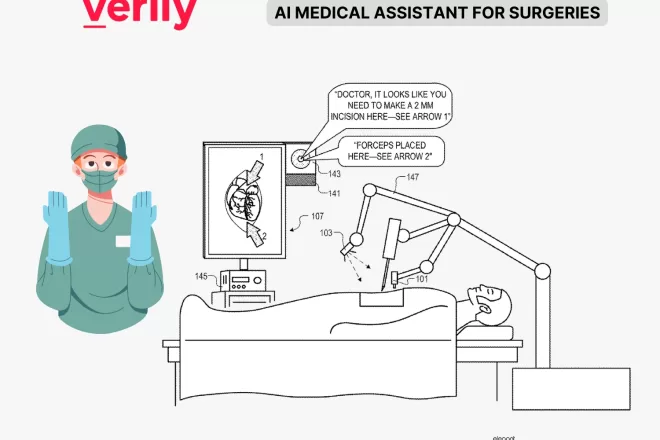
How Is Google’s AI Surgical Assistant Transforming the Way Surgeries Are Performed?
Google’s AI surgical assistant is revolutionizing the operating room by offering real-time support to surgeons, reducing mental load, and boosting precision. Key features include:
Voice commands for instant data access
Live step-by-step guidance during surgery
Visual highlights to pinpoint critical areas
Tool tracking and pressure monitoring
Smart lighting and audio alerts
Estimated surgery time and data storage for improvement
By streamlining complex tasks, this AI assistant lets surgeons focus on saving lives with greater accuracy and efficiency.
As technologies improve, medical surgeries become incredibly complex, requiring a surgeon to make quick, high-stakes decisions while juggling massive amounts of information. That’s why Google’s AI medical assistant for surgeries is gaining recognition these days.
Standard tools and methods, while effective, often require surgeons to shift their attention between the patient, monitors, and various surgical instruments. This can lead to delays or even mistakes in critical situations.
Thanks to our collab with David from @xleaks7, we spotted Alphabet’s Verily’s patent that tackles this problem by providing surgeons with real-time guidance through AI-powered cues and feedback.
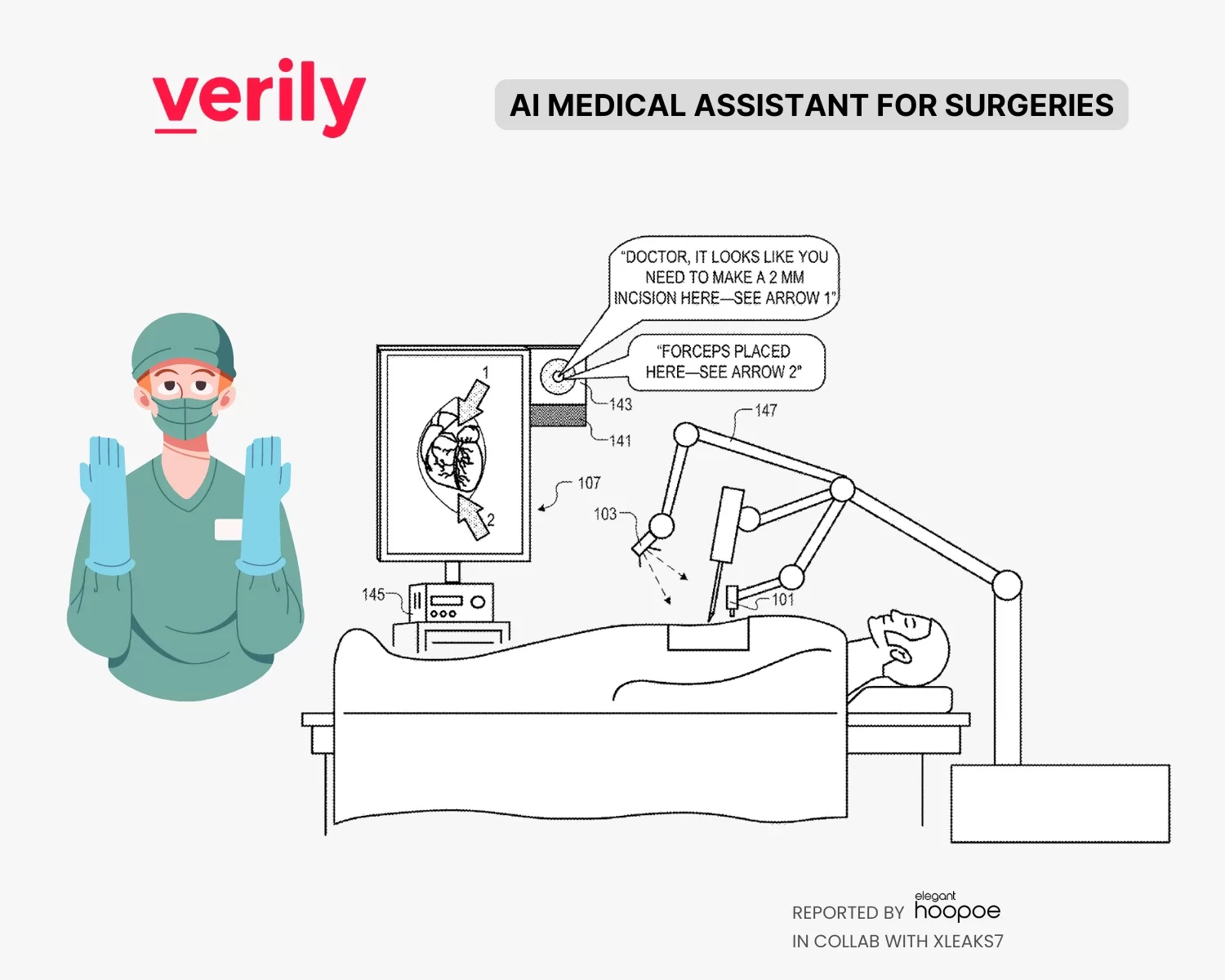
The Problem
Google’s AI medical assistant patent highlights the significant challenges faced in surgical procedures, where quick decision-making and precision are crucial.
Surgeons often deal with overwhelming amounts of information, ineffective communication methods, and limited visibility, all of which can increase the risk of errors and lead to inconsistent patient outcomes.
The Solution Offered by Google’s AI Medical Assistant
The patent tackles this problem by providing surgeons with real-time guidance through AI-powered cues and feedback.
Google’s AI medical assistant aims to reduce mental overload and improve decision-making by letting the technology handle complex visual data and predict surgical steps.
In other words, it’s designed to allow surgeons to focus on what they do best—saving lives—while the system provides helpful, real-time information.
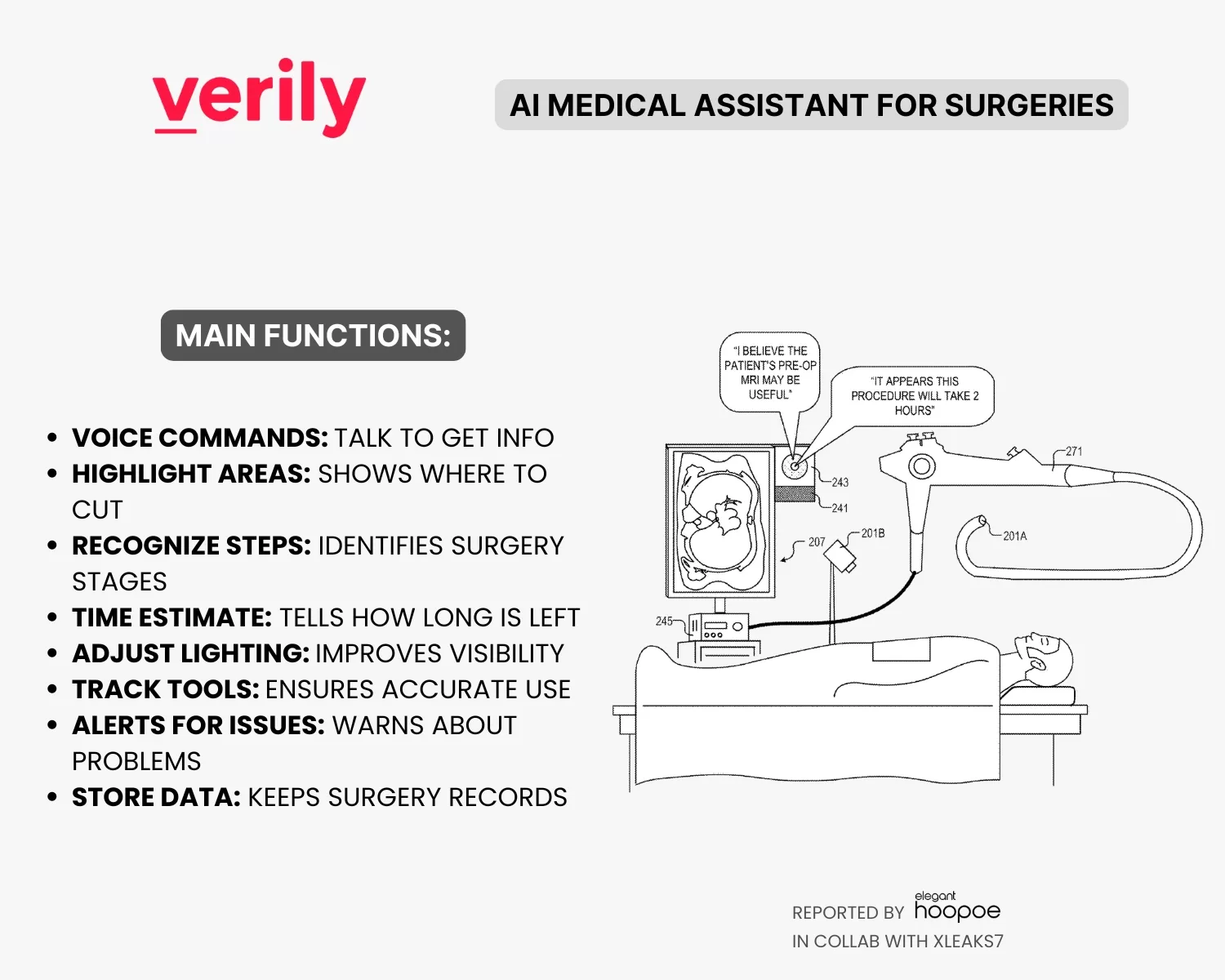
What Can Google’s AI Medical Assistant Help With?
- Voice Commands: Surgeons can use their voice to ask for patient information or images during surgery.
- Highlight Important Areas: The system shows important spots in the surgery video, like where to cut or place tools.
- Recognizing Surgery Steps: The AI helps identify and guide surgeons through different steps of the surgery using live video.
- Time Left Estimate: It guesses how much time is left in the surgery based on what has already been done.
- Lighting Control: Adjusts the lights to help surgeons see important body parts better.
- Tracking Tools: Uses sensors to monitor where surgical tools are and how much pressure they apply, ensuring accuracy.
- Alerts for Problems: Gives audio warnings for any unusual events or important reminders during the surgery.
- Storing Data: Keeps records of surgeries for future reference, helping improve results over time.